
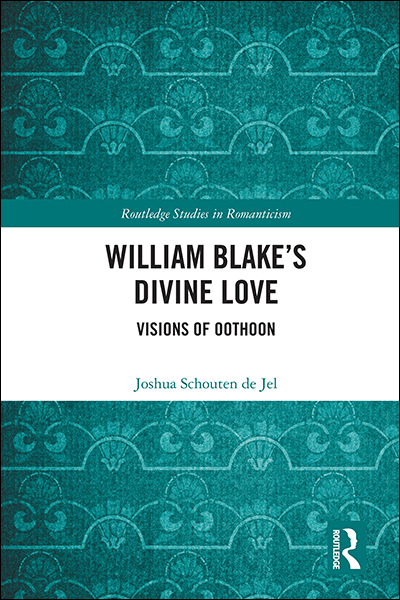
Joshua Schouten de Jel, William Blake’s Divine Love: Visions of Oothoon
DOI:
https://doi.org/10.47761/biq.383Abstract
With its stunning frontispiece, shocking themes—even for our time, let alone Blake’s—of sexuality, rape, and possession, and its erotic imagery and provocative advocacy of free love through one of Blake’s most interesting heroines, Visions of the Daughters of Albion is an outstanding and controversial poem. Critics such as Josephine McQuail, Irene Tayler, and Kathryn Freeman celebrate Oothoon’s feminism as triumphant as she manages to refuse being branded a harlot by the patriarchal morality. Others—such as Lucy Cogan, V. A. De Luca, Brenda Webster, Michelle Leigh Gompf, and, most notably, Helen Bruder—claim that her short-lived sexual freedom is a failure; they contend that despite her revelation, her inability to make her triumph over Urizenic reasoning heard by the male characters of the poem makes her a tragic heroine whose initial achievement deteriorates into patriarchal standards. Joshua Schouten de Jel’s book is an extensive study of Visions that celebrates and defends Oothoon’s transcendent acceptance of free love as visionary and argues further that even when her words fall on deaf ears, the significance of her visionary attitude is not diminished.
 Please consult our
  When the Blakes lived on South Molton Street, who were their neighbors? Angus Whitehead goes door to door.